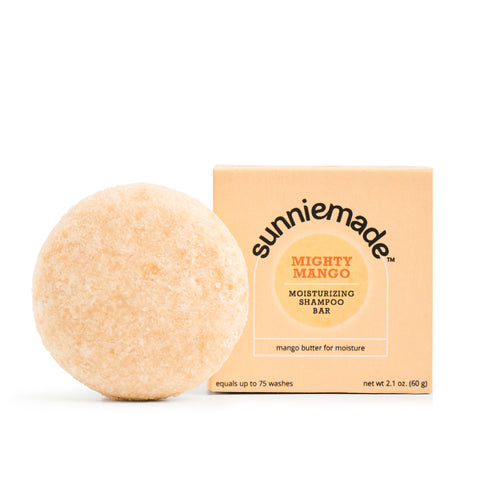
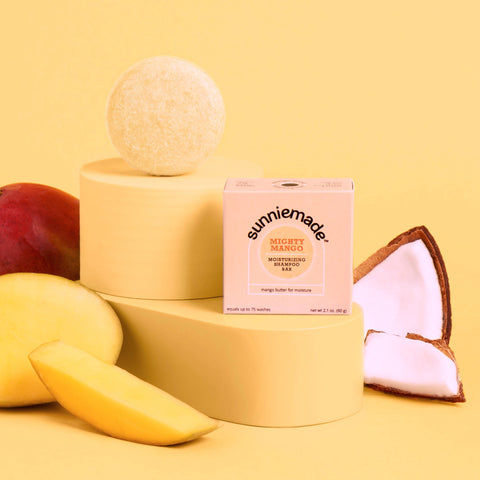
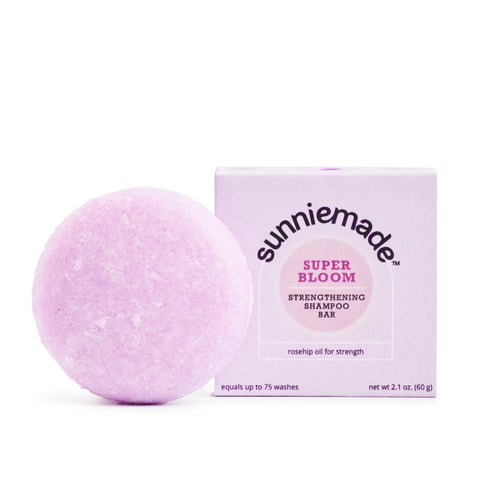
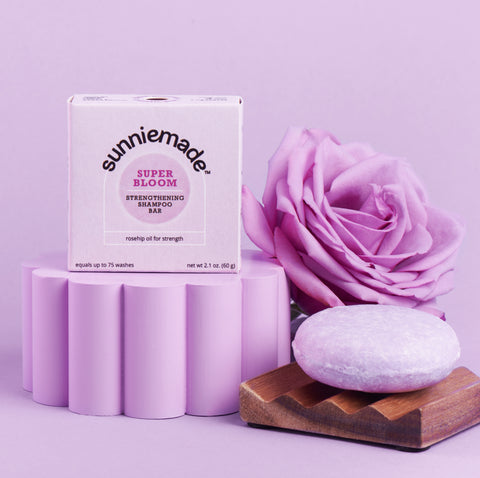
Shampoo Bars vs. Liquid Shampoo: What’s the Difference? (and How to Switch with Confidence)
If you’ve ever picked up a shampoo bar and wondered how is this really different from the liquid stuff I’ve always used? — you’re not alone. Shampoo bars can feel unfamiliar at first, but once you understand how they compare to liquid shampoo, the switch becomes a lot less intimidating.
This guide breaks down the key differences between shampoo bars and liquid shampoo, with practical details on ingredients, storage, usage, performance, and sustainability—so you can decide what works best for your hair and your routine.
Shampoo Bars vs. Liquid Shampoo: At-a-Glance Comparison

| Category | Sunniemade Shampoo Bars | Liquid Shampoo |
|---|---|---|
| Water Content | Concentrated formula with no added water | Up to ~90% water, diluted actives |
| Ingredients | Fewer, more concentrated ingredients; no need for heavy preservatives | Requires preservatives to keep water-based formula stable |
| Performance | Highly effective, rich lather once activated | Familiar lather, but often dispenses more than needed |
| How Much You Use | Only what you activate with water—a little goes a long way! | Pump dispenses more than you need, easy to over-pour |
| Longevity | One bar can replace up to (3) 8-oz plastic bottles | Bottles empty quickly with regular use, unused product can be easily washed by accident |
| Packaging | Plastic-free, recyclable and/or compostable | Plastic bottles, often single-use |
| Storage | Needs airflow between uses to stay dry, best stored on a wire drying rack or dish that keeps the bar high and dry | Clunky bottles create clutter and take up shower space |
| Travel-Friendly | TSA-friendly, no leaks | Liquid restrictions + spill risk |
| Environmental Impact | Low-waste, lightweight to ship | Plastic + higher shipping emissions |
Ingredients: Concentrated vs. Diluted
Liquid shampoo needs water to flow through a bottle—so most formulas are primarily water, followed by surfactants, fragrance, and preservatives. Shampoo bars skip the filler. Because they’re solid, they rely on concentrated, effective ingredients that activate only when you add water.
For Sunniemade shampoo bars, this means:
- No added preservatives
- No watered-down formulas
- More direct contact between your hair and the ingredients doing the work
This concentration is why shampoo bars can be small but mighty—a little goes a very long way!
How to Use a Shampoo Bar
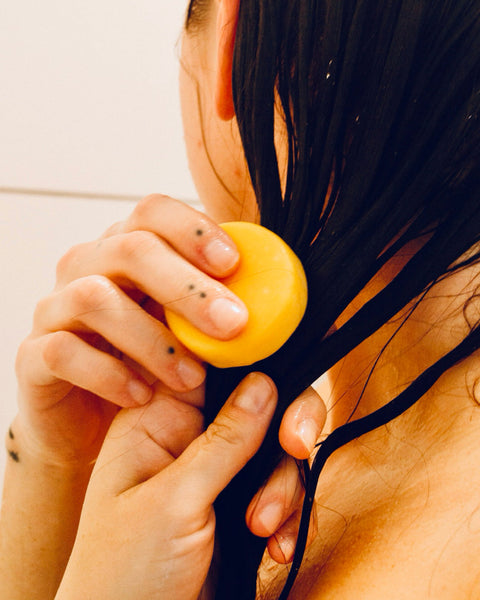
Using a shampoo bar is simple, but slightly different than squeezing a bottle:
1. Thoroughly wet your hair. Wet the bar and either:
- Rub it directly onto your scalp, or
- Lather it between your hands and apply hands to scalp.
3. Massage the lather into your scalp like normal shampoo.
4. Rinse well and repeat if desired.
Pro tip: Most people need less product than they think. A few swipes or a handful of lather is usually enough.
Storage Matters (This Is Key)
One of the biggest differences between bars and liquid shampoo is storage.
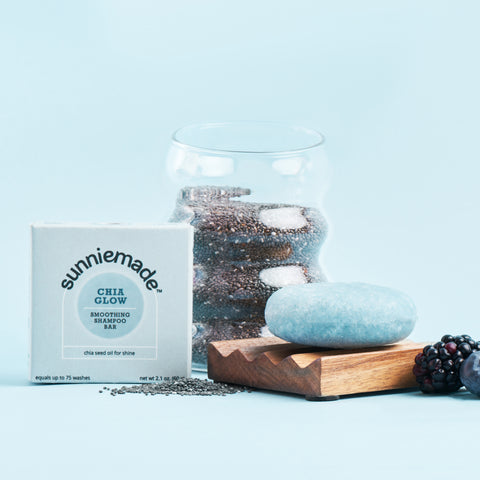
Shampoo bars need to dry fully between uses to last as long as possible. The ideal setup:
- A well-draining soap dish
- A rack or tray that allows airflow
- Kept out of standing water and away from the shower stream
If bars feel like they’re “melting” too fast, storage is almost always the reason.
Performance: Do Bars Actually Work?
This is the most common concern—and the short answer is: yes.
Modern shampoo bars are formulated to cleanse effectively while supporting scalp health and hair softness. Because Sunniemade shampoo bars are concentrated, many people notice:
- Rich lather immediately upon wetting
- Less product buildup over time
- Hair that feels clean, soft, and bouncy
If you’re switching from conventional liquid shampoo, you should begin to notice a difference right away!
Sustainability: Where Bars Really Shine
Shampoo bars eliminate many of the environmental trade-offs of liquid products:
- No plastic bottles
- Less water used in production
- Lighter weight = lower shipping emissions
- Minimal waste at end of life
One bar can replace multiple plastic bottles, making bars one of the easiest low-waste swaps in a daily routine.
How to Make the Switch Smoothly
If you’re new to shampoo bars, here’s how to set yourself up for success:
- Commit to at least 1–2 weeks of use
- Focus lather on your scalp, not your ends
- Store your bar properly between washes
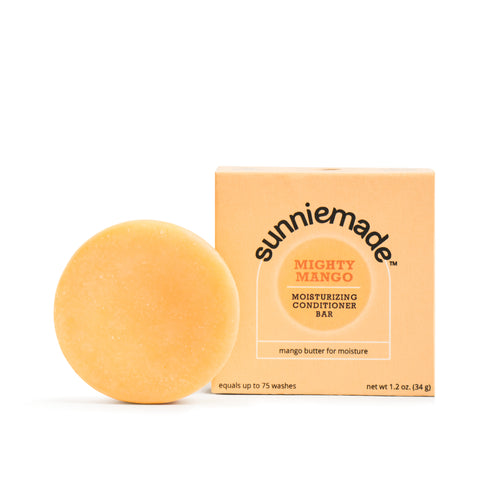
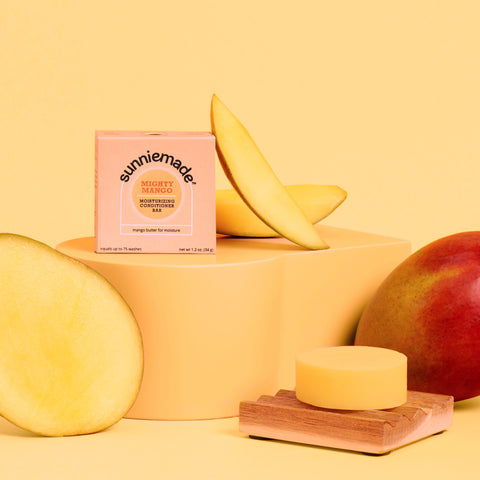
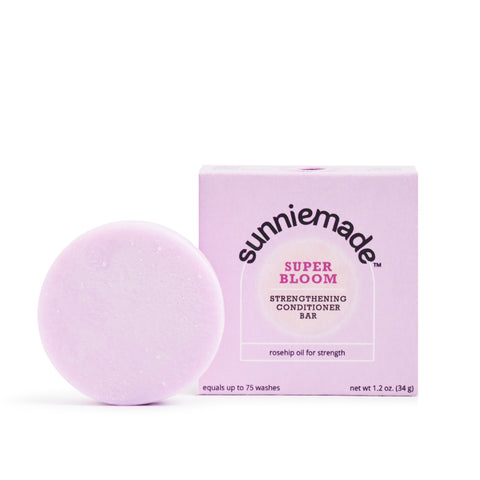
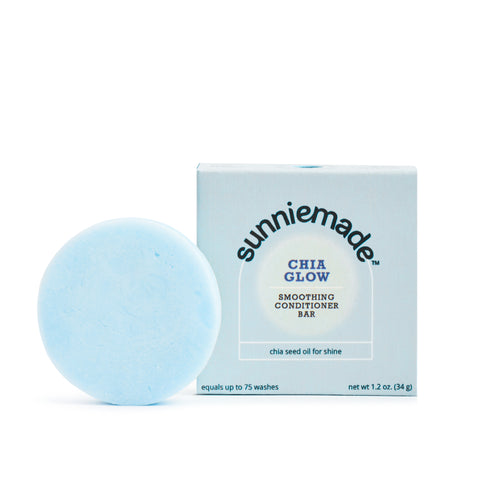
- Pair it with a conditioner bar for maximum softness and detangling
Switching doesn’t have to be all-or-nothing. Many people alternate between bars and liquid at first before fully transitioning.
Bottom Line
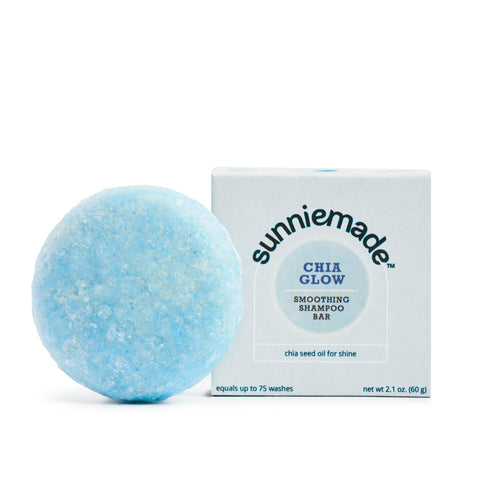
Shampoo bars and liquid shampoo both clean your hair—but they do it in very different ways. Bars offer a concentrated, plastic-free, travel-friendly alternative that rewards a small learning curve with long-term benefits for both your hair, health and the planet.
If you’ve been curious about making the switch, understanding these differences is the first step toward a routine that works better—and wastes less.