What Running a Sustainable Brand Has Taught Me
When I started Sunniemade, most conversations about sustainability centered around one thing: plastic pollution.
People were becoming increasingly aware of climate change and the impact our consumption has on the planet. The images of beaches covered in bottles and sea turtles tangled in plastic were impossible to ignore. Like so many others, I wanted to be part of the solution.

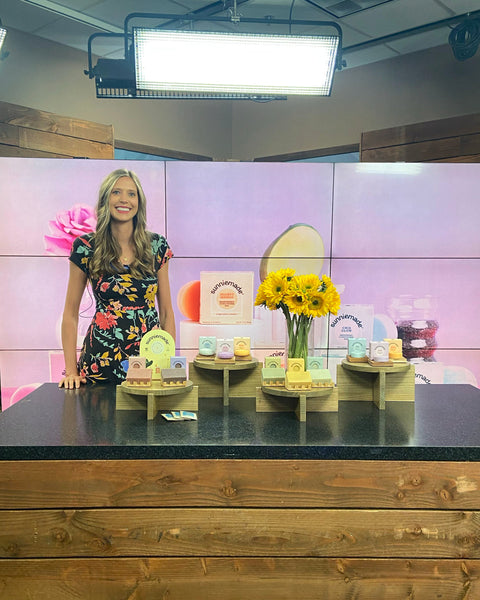
One of our first ever market booths!
Fast forward a few years, and the conversation has changed.
People still care deeply about the planet, but I've noticed the focus has shifted closer to home. As global environmental challenges have grown more complex—and often felt frustratingly out of our individual control—many of us have turned our attention to the choices we can make every day.
Today, more conversations are about microplastics in our bodies than plastic in our oceans. More people are reading ingredient labels. More people want to know what's in the products they use every day, and whether those products are truly safe.
I don't see that shift as selfish.
I think it's human.
When the world's biggest problems feel overwhelming, we naturally look for ways to protect ourselves and the people we love. We focus on the decisions we can actually make—the products we bring into our homes, the food we eat, and the routines we build every day. While we can't lose sight of collective action, caring for ourselves isn't at odds with caring for the planet. More often than not, the two go hand in hand.
At the same time, life has gotten more expensive. We're all paying closer attention to where our money goes. Every purchase feels a little more intentional.
Honestly, I get it.
As a consumer, I care about all of those things too.
And as someone building a sustainable business, it's made me think a lot about what really matters.
People
One thing I've always known—and am feeling even more deeply today—is that doing better isn't enough. Sustainable swaps entrenched in sacrifice don't last.
A product has to work.
It has to fit into someone's life. It has to feel worth the money they spent on it. It has to earn a place in their daily routine.
And today, it also has to give people confidence in what they're bringing into their homes. More than ever, people are paying attention to ingredients. They want products that are effective, thoughtfully formulated, and made with the well-being of themselves and their families in mind.
I think that's a good thing.
I never want someone to buy Sunniemade simply because it's plastic-free. I want them to choose it because they love how it performs, trust what's in it, and feel good about using it every single day.
That's actually why I've spent so much time this year buried in product development. Behind every formula are dozens of decisions, tests, and revisions—all with one goal: creating products that perform beautifully while staying true to the ingredients and values we believe in.
Because sustainability shouldn't require lowering your expectations. It should raise the standard for what everyday products can be.
Planet

I still believe reducing plastic waste matters. And choosing clean ingredients supports a cleaner world.
That mission hasn't changed just because the conversation has evolved.
But I also don't think sustainability should come from guilt. Plastic is ubiquitous and impossible to avoid. I hope that one day that will change, but for now, our goal can't be perfection or complete elimination of plastic. None of us will make perfect choices all the time, and honestly, that's okay.
Real change happens through better choices made consistently—not perfect choices made once.
If we can create products that people genuinely want to use, and those products also eliminate plastic bottles, reduce carbon emissions, use thoughtful ingredients, and come in lower-waste packaging, that's a win for everyone.
Profit
This is the part people don't always talk about.
When I first started Sunniemade, I almost felt uncomfortable saying the word "profit." Like caring about building a healthy business somehow made the mission less genuine.
I don't believe that anymore.
A business that can't sustain itself can't sustain its mission.
Profit allows us to improve our formulas, invest in better packaging, support the people we work with, gain new customers that will grow our impact, and continue creating products that create positive change. It gives us the ability to keep showing up next year—and the year after that.
For me, profitability and mission are aligned. Profit is what makes long-term impact possible. What makes us different is that we don't pursue one without the other.
They're Not Competing Priorities
There's a business concept called the "triple bottom line": people, planet, and profit.
People deserve products that work and fit real budgets.
The planet deserves businesses that are willing to do better, even when it's harder.
And businesses deserve the opportunity to be healthy enough to keep doing good work.
I don't think those priorities are at odds with each other.
In fact, I think the best businesses are the ones that respect all three.
Four years into this journey, I still don't have everything figured out. I wrestle with these priorities every day. We keep learning. We keep improving.
Sometimes that means spending months formulating products until they perform exactly the way we believe they should. Sometimes it means saying no to a cheaper packaging option because it doesn't align with our values. Sometimes it means raising prices so we can keep bringing these products to you. Those decisions aren't always the easiest—but they're the ones I feel proud of.
If running Sunniemade has taught me anything, it's this:
You shouldn't have to choose between taking care of yourself, taking care of the planet, and supporting businesses that are built to last.
The future I'm excited about is one where we can do all three.
☀️✌️ Sarah